
Most advice about intelligent automation in financial services starts with model accuracy, then treats orchestration as a later optimization. That's backwards. In regulated finance, the hardest problem isn't getting a model to read a document or classify a transaction, it's getting that intelligence to move through legacy systems, approval chains, audit requirements, and exception handling without breaking control.
The market has already moved beyond pilot projects. A major 2026 survey found that 81% of financial services firms were already adopting AI at some level, and 40% had reached advanced adoption stages such as scaling or transforming, with fintechs ahead of incumbents, 47% versus 30% respectively (FII international report). That shift matters because the winners won't be the teams with the flashiest demo. They'll be the teams that can operationalize AI across the actual fabric of finance.
Why Most Automation Projects Stall Before They Scale
The common failure story says automation stalls because the model isn't accurate enough. In practice, the failure usually happens one layer up. The model may read a document correctly or flag a suspicious payment, but the workflow around it can't absorb the output cleanly, so the process falls back to manual review.
A recent industry source found that only 18.6% of financial institutions had enterprise-wide orchestration, while 65.1% said legacy platforms limit modernization and 61.4% cited siloed environments as a constraint (Redwood readiness report). That's the hidden bottleneck. If the core banking system, document store, case management tool, and compliance queue don't talk to each other, AI becomes another island instead of an operating capability.
The real cost of fragmentation
When teams deploy automation in one department at a time, they often optimize locally and slow the enterprise globally. A lending team may automate document intake, while compliance still reroutes exceptions by email and operations still rekeys data into a downstream platform. The result is not intelligent automation. It's a faster front end attached to an unchanged back end.
The better framing is enterprise workflow design, not point automation. That's why implementation timelines matter as much as the tool choice, and why a practical roadmap like the one in this AI implementation timeline guide is useful for planning sequencing, dependencies, and stakeholder alignment.
Practical rule: if the workflow can't survive one exception without a human handoff, you don't have an automation strategy yet. You have a partial digitization effort.
The institutions that scale successfully treat orchestration as first-class infrastructure. They standardize handoffs, define escalation logic, and decide where human review belongs before they push AI into production. Without that discipline, even strong models end up trapped in pilot purgatory.
The Core Components of Intelligent Automation
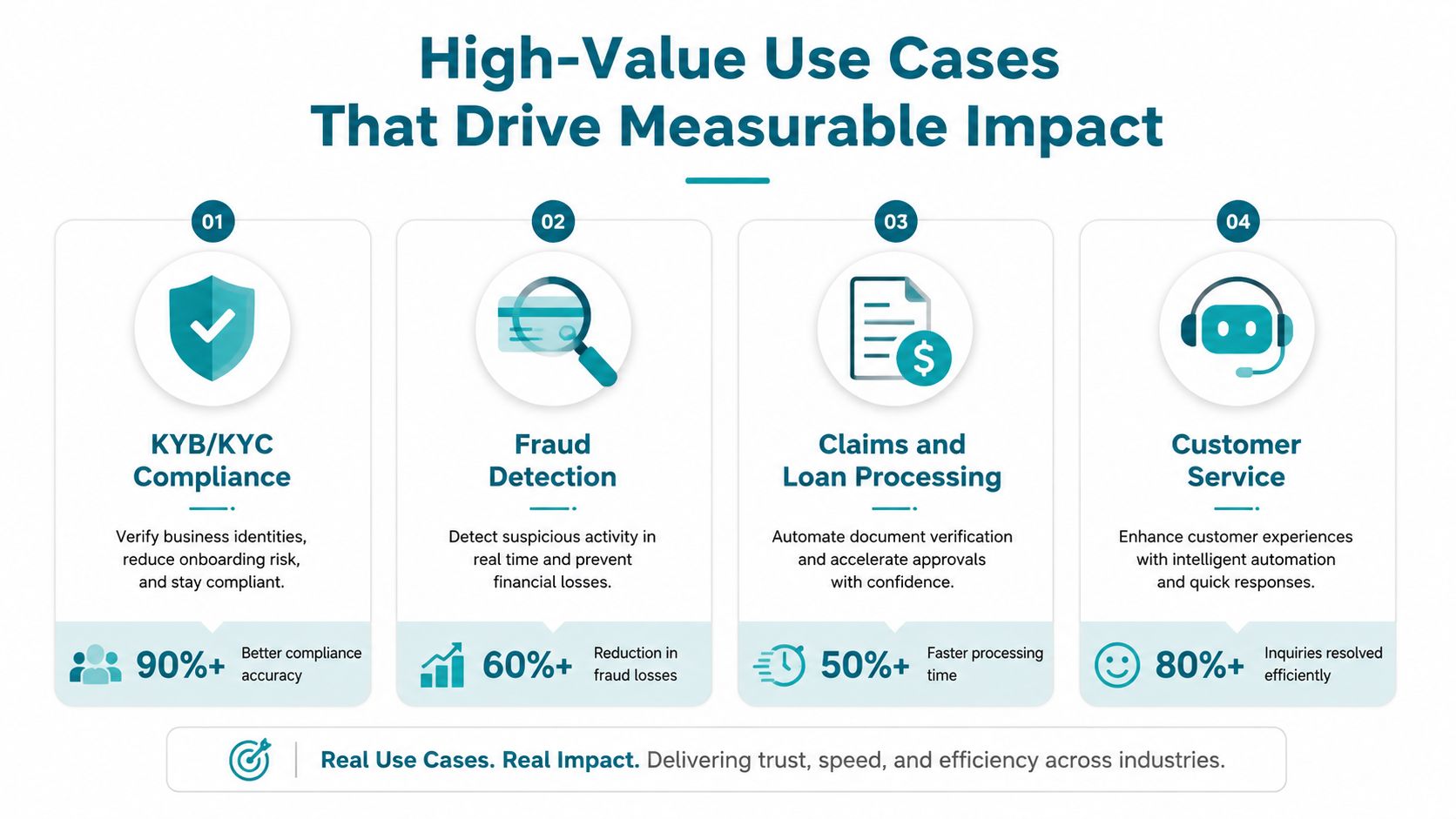
Intelligent automation in financial services usually combines four building blocks. Each one does a different job, and the integration between them matters more than any single component on its own.
RPA handles deterministic work
Robotic process automation, or RPA, is the simplest layer. It moves data, clicks through screens, updates records, and repeats rules-based tasks that don't need judgment. In finance, that might mean copying approved values between systems, triggering routine notifications, or routing a completed packet to the next queue.
RPA is useful because it creates speed in stable parts of the process. It's not designed to interpret ambiguity. When a document arrives in a new format or a field is missing, RPA should stop and escalate instead of guessing.
Document intelligence reads what humans used to inspect manually
Document intelligence combines OCR, NLP, and deep learning to turn messy files into structured data. That matters in banking because many workflows still depend on PDFs, scans, statements, forms, and mixed-format packages. One study reported 96.1% OCR accuracy, 97.6% entity extraction F1 for payee names and transaction amounts, 98.7% fraud-detection classification accuracy, and an average processing time of 115 ms per document under load (study on financial document processing).
Those numbers matter less as a sales pitch than as a signal. Good preprocessing, including noise reduction and skew correction, improves downstream precision and reduces manual exception handling. In plain terms, better extraction means fewer analysts rechecking the same fields.
For a useful overview of how this thinking is evolving in banking operations, the Visbanking banking AI revolution is a solid companion read.
ML and LLMs add judgment support
Machine learning and large language models help with pattern recognition, classification, summarization, and decision support. They're strongest where the work is probabilistic, not binary. That includes ranking risk, comparing similar cases, summarizing customer intent, and identifying outliers that don't fit historical patterns.
The key is to use these models to assist decisions, not to hide the decision logic. If a lender, compliance analyst, or operations manager can't explain why a model output was accepted, the workflow isn't ready for regulated deployment.
AI agents orchestrate the messy middle
AI agents are useful when a task spans multiple systems and multiple steps, especially when the sequence changes based on what the agent finds. They can gather documents, compare records, trigger a check, ask for clarification, and route the case onward. That's where agentic automation starts to matter, but only if governance and access controls are already in place.
Simple test: if a workflow needs three systems, two policy checks, and one exception path, agentic orchestration may help. If it only needs one repeated action, RPA is usually enough.
High-Value Use Cases That Drive Measurable Impact
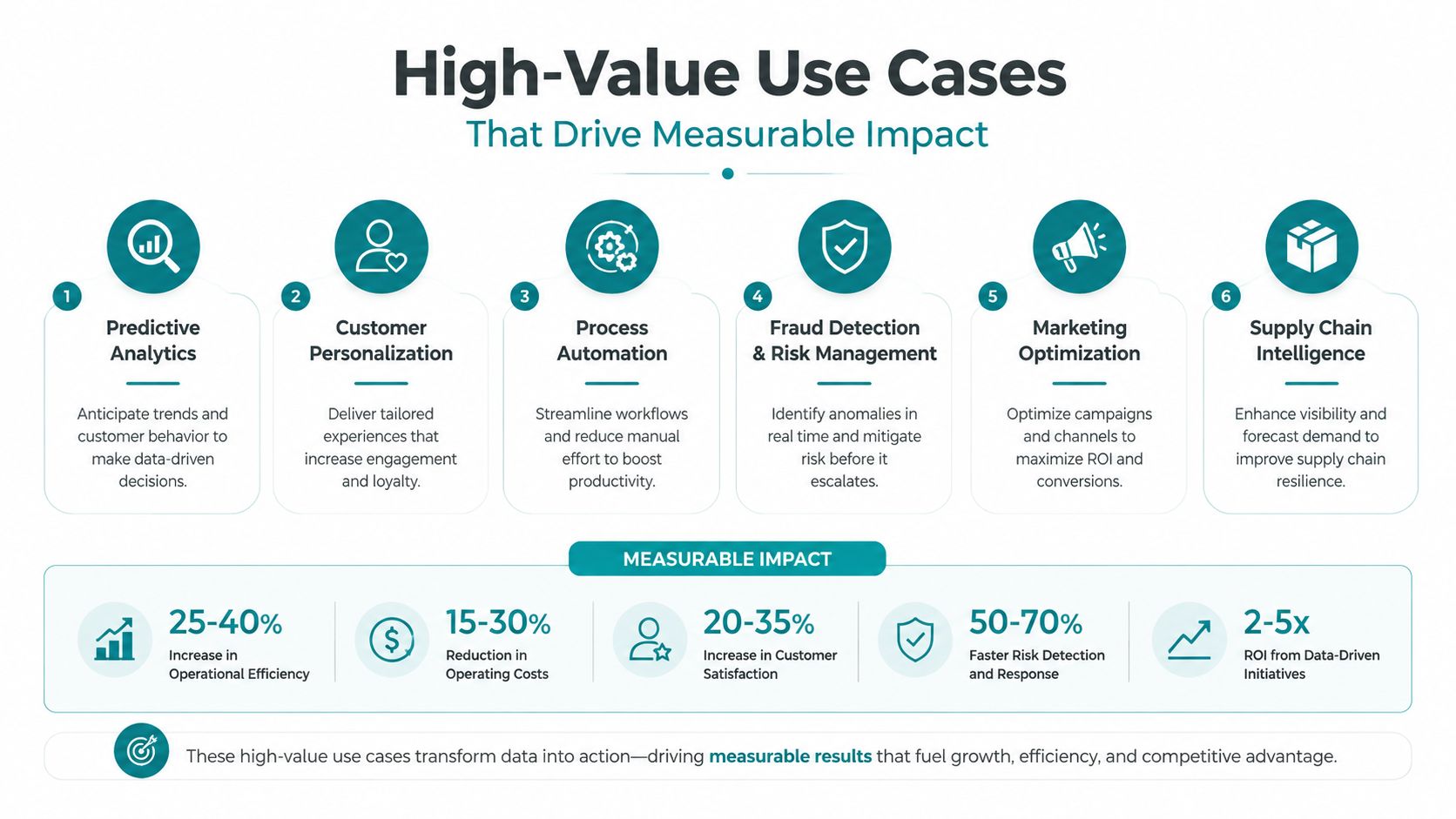
The highest-return use cases share one trait, they sit in processes with repeated exceptions, heavy documentation, or slow review cycles. That's why compliance, fraud, lending, and service operations usually come first.
Compliance and KYB/KYC
KYB and KYC work benefits from structured extraction and workflow discipline. When document intelligence pulls entity data from business registrations, tax records, and supporting paperwork, analysts spend less time transcribing and more time verifying risk. The value isn't just faster intake, it's cleaner auditability because each step can be traced.
A practical reference for organizations assessing control exposure in this area is the SaaS and fintech risk audit guide, especially if the automation stack spans multiple vendors and control owners. Smart orchestration matters most here, because compliance teams need the process to be repeatable, not just fast.
Fraud detection and payment anomaly review
Fraud teams rarely need another rules engine that fires on everything. They need better triage. The strongest setups combine statistical models with routing logic so analysts can focus on cases that deserve review.
That's also why automated workflows need strong exception handling. If a suspicious transaction is flagged, the system should enrich the case, gather context, and route it correctly instead of dumping more noise into the queue. Better orchestration cuts rework and makes investigators more effective.
Loan and claims processing
Loan and claims workflows are document-heavy, policy-driven, and full of dependencies across systems. Intelligent automation helps with intake, validation, status updates, and document assembly. RPA is good at moving cases through defined steps, while document intelligence reduces the manual load at the front of the process.
For teams mapping where RPA fits in this stack, this finance automation guide is a useful operational reference. The important thing is not to automate the paperwork alone. The process needs routing, escalation, and clear exception ownership.
Customer service and case support
Customer service automation works best when it handles narrow, repeatable questions and passes complex issues to humans with context intact. That means giving service teams the account summary, prior interaction history, and relevant compliance flags before the customer ever reaches an agent.
The common mistake is deploying chat on top of broken workflows. If the bot can't access the right systems or the case data is fragmented, it just adds another layer of frustration. Smart automation should reduce effort for both the customer and the service desk.
Measuring Success with the Right KPIs
Automation programs stall at scale when the dashboard tracks accuracy but ignores throughput and handoff friction. In finance, a strong model can still miss the point if it does not improve case flow, reduce rework, or support the business outcome it was built to deliver. KPI design has to reflect that operational reality.
Use a four-part view, accuracy, throughput, cost, and business impact. The exact metrics will vary by process, but the framework stays the same.
| KPI Category | Example Metrics | Baseline Range | Target Improvement |
|---|---|---|---|
| Accuracy | Extraction precision, exception rate, classification consistency | Process-specific | Measurable reduction in human rework |
| Throughput | Cases processed, cycle time, queue clearance speed | Process-specific | Faster end-to-end handling |
| Cost | Manual touchpoints, analyst hours, rekeying effort | Process-specific | Lower operational drag |
| Business Impact | Approval speed, customer response time, policy adherence | Process-specific | Better service and cleaner control |
Build the dashboard around the decision, not the tool
A useful dashboard tells leaders whether automation is changing how work moves through the institution. It should show how many cases were routed automatically, how many needed review, where delays occurred, and which exceptions keep repeating. If the program only reports model accuracy, it misses the friction that slows scale.
The AmasaTech ROI calculator guide is relevant here because ROI in financial services rarely comes from one number alone. It comes from linking process efficiency to measurable business outcomes, then tracking that connection over time.
Useful standard: tie each automation initiative to one operational metric and one business metric. That keeps the team honest when the project starts to scale.
Start with the metrics process owners already understand, then add more depth once the workflow is stable. The best dashboards are the ones leaders use in steering meetings.
The institutions getting ahead treat intelligent automation as an operating model. That means fixing governance, cleaning up legacy integration, and reserving human judgment for cases that need it.
A Phased Roadmap from Quick Wins to Scale
Financial services teams usually fail when they try to jump from concept to enterprise rollout in one move. The better path is staged, controlled, and specific about what gets proven in each phase.
Foundation starts with one clean workflow
The first phase is about choosing a narrow process with enough volume to matter and enough structure to learn from. Teams should assess data quality, map system dependencies, and align the process owner, compliance lead, and operations manager before any production work starts.
A disciplined roadmap like AmasaTech's AI adoption roadmap becomes useful, because it forces sequencing instead of wishful thinking. A pilot that skips governance or integration discovery usually becomes expensive rework later.
Expansion is where orchestration earns its keep
Once the first workflow is stable, the next move is not more models, it's better orchestration. That means defining exception routing, integrating case management, and ensuring compliance checks are triggered at the right moment in the flow.
This is the phase where many teams discover that the bottleneck isn't AI performance, it's handoff design. If one system can't accept the output from another, the automation stalls at the boundary. That's why workflow ownership matters as much as the tooling choice.
Scale is a governance problem
Enterprise scale requires repeatable controls, not just more deployments. Policies for validation, monitoring, access control, and change management need to be built into the operating model, not added afterward. That's the only way to keep automation reliable as volumes and use cases grow.
The reason the same report noted that 91.4% of financial institutions believe automation improves resilience and compliance is simple, the value is real once the operating substrate is ready (IIF-EY report). The trick is building the substrate first.
Managing Risks and Building Governance Frameworks
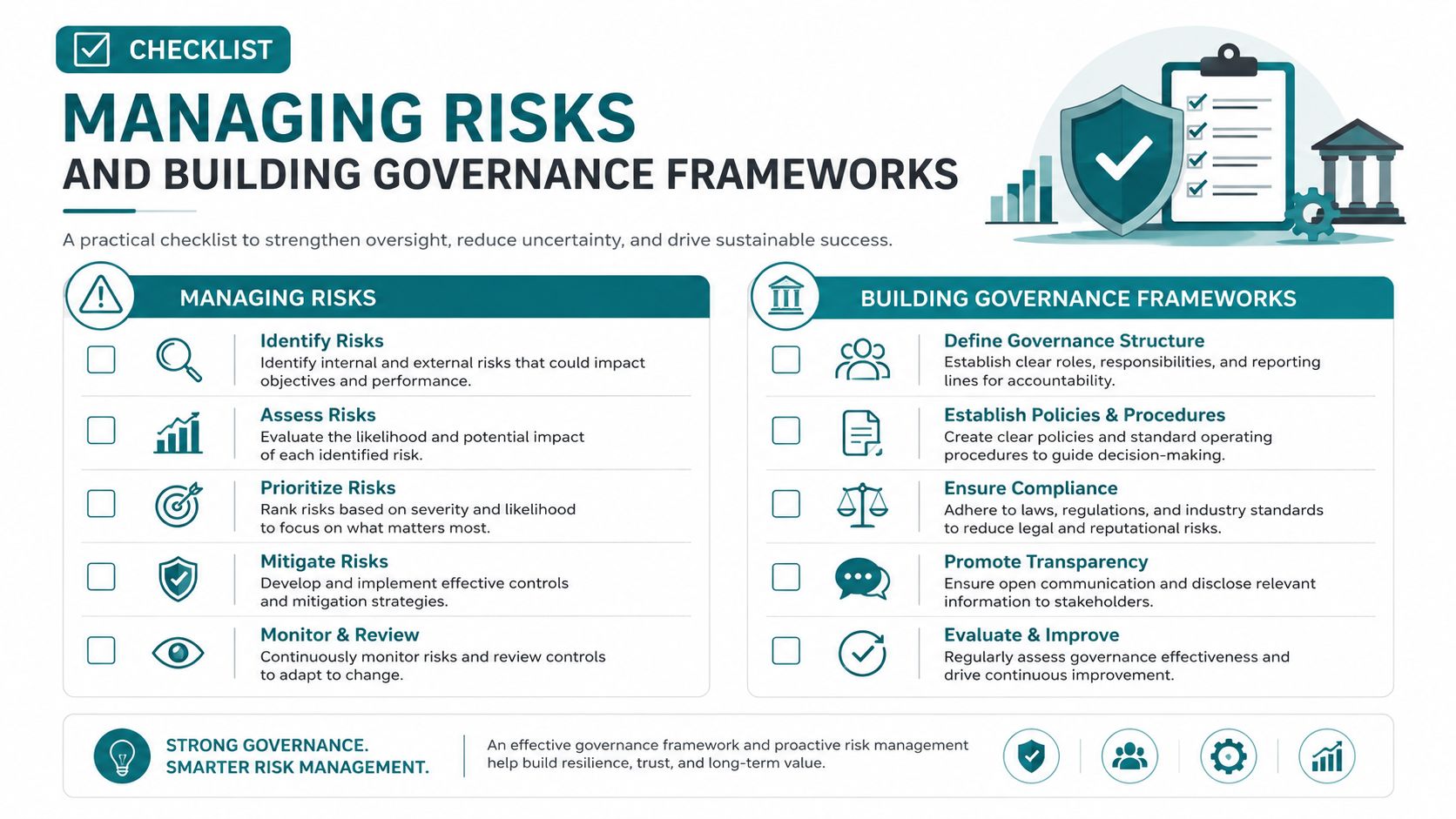
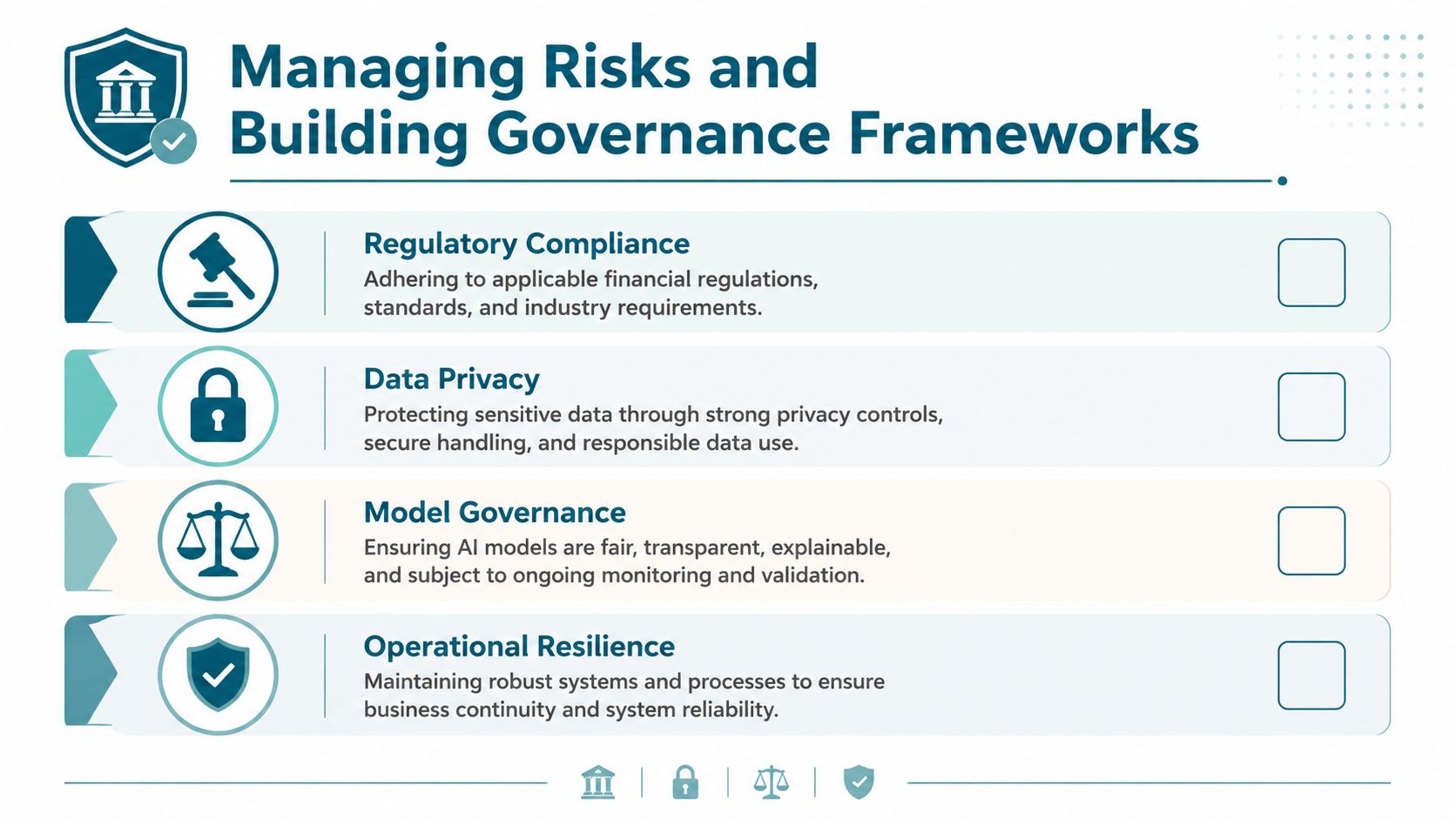
In regulated finance, governance isn't a brake on intelligent automation. It's the thing that makes scale possible. Without it, teams can deploy useful tools that never survive audit, security review, or production stress.
Compliance and explainability have to be built in
Every automated workflow needs a traceable path. That includes who approved the logic, what data was used, where exceptions went, and when the process changed. If the system can't explain itself well enough for a control review, it's not ready for front-line work.
Identity and data governance are now core design issues
The risk surface has changed as AI agents and autonomous workflows become more common. A 2026 CSA report says AI agents are becoming mainstream in financial services operations, sensitive data leakage is the leading AI security concern, and non-human identity governance plus AI-specific monitoring are emerging priorities (CSA financial services AI security report). That means access control can't stop at the employee badge.
If you want a practical lens on the security side of that problem, the Agntz AI security risk guide is a useful complement. It's especially relevant for teams testing agentic workflows against internal data, third-party APIs, and payment actions.
Governance should be operational, not ceremonial
Policies only matter if teams can apply them during actual work. That means validation schedules, drift monitoring, model approvals, incident response, and vendor oversight need owners and workflows. It also means the compliance team should be involved before deployment, not after the first issue lands.
A useful internal benchmark is simple. If a workflow adds risk, it needs stricter governance. If it reduces manual error and improves traceability, it should still be monitored, but not buried under heavyweight controls that kill adoption.
Good governance doesn't slow automation down. It keeps automation from becoming a shadow process nobody can defend later.
Real-World Success Stories and Lessons Learned
The most reliable deployments don't start with grand platform programs. They start with one process that hurts enough to matter and is simple enough to stabilize. In one financial services environment, a document-heavy workflow moved from manual review to structured intake by pairing extraction with routing, then tightening the exception rules only after the operations team saw where cases were still failing.
The lesson was not that the model needed to get smarter. It was that the handoffs needed to get cleaner. Once the team aligned intake, review, and escalation inside one operating flow, the process became easier to support and easier to audit.
Another common pattern is that teams overestimate the value of speed alone. Fast processing without good exception ownership just creates a faster backlog somewhere else. The stronger programs are the ones where compliance, operations, and technology agree on who owns each decision boundary before the rollout begins.
The institutions getting ahead now are treating intelligent automation in financial services as an operating model, not a software purchase. That means they're fixing governance, cleaning up legacy integration, and choosing workflows where human judgment is reserved for the cases that need it.
If you're trying to move from pilots to production, AmasaTech helps teams assess readiness, map the right workflow sequence, and build automation around the controls finance needs. Visit AmasaTech if you want a practical starting point for AI audits, document automation, or regulated workflow design.